

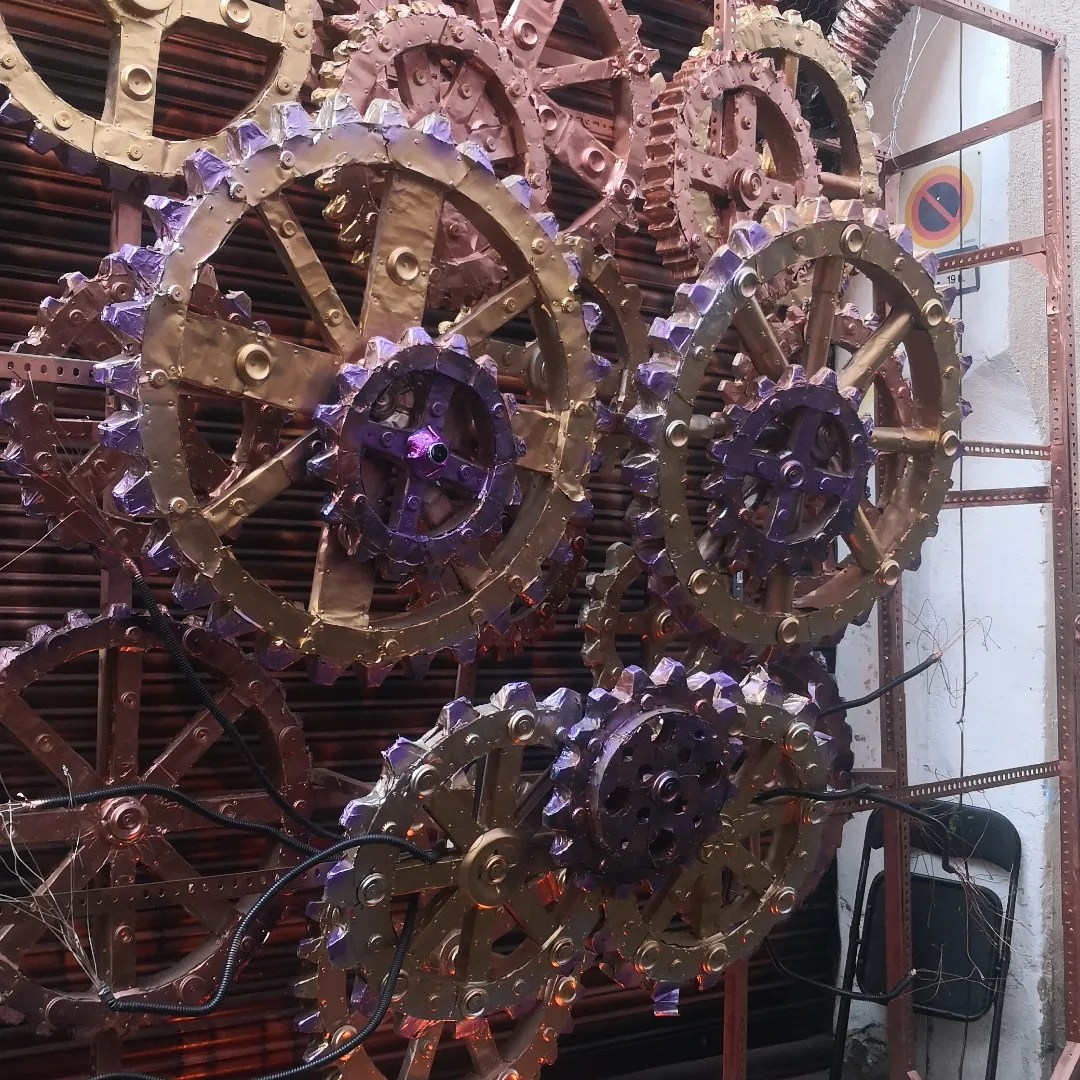
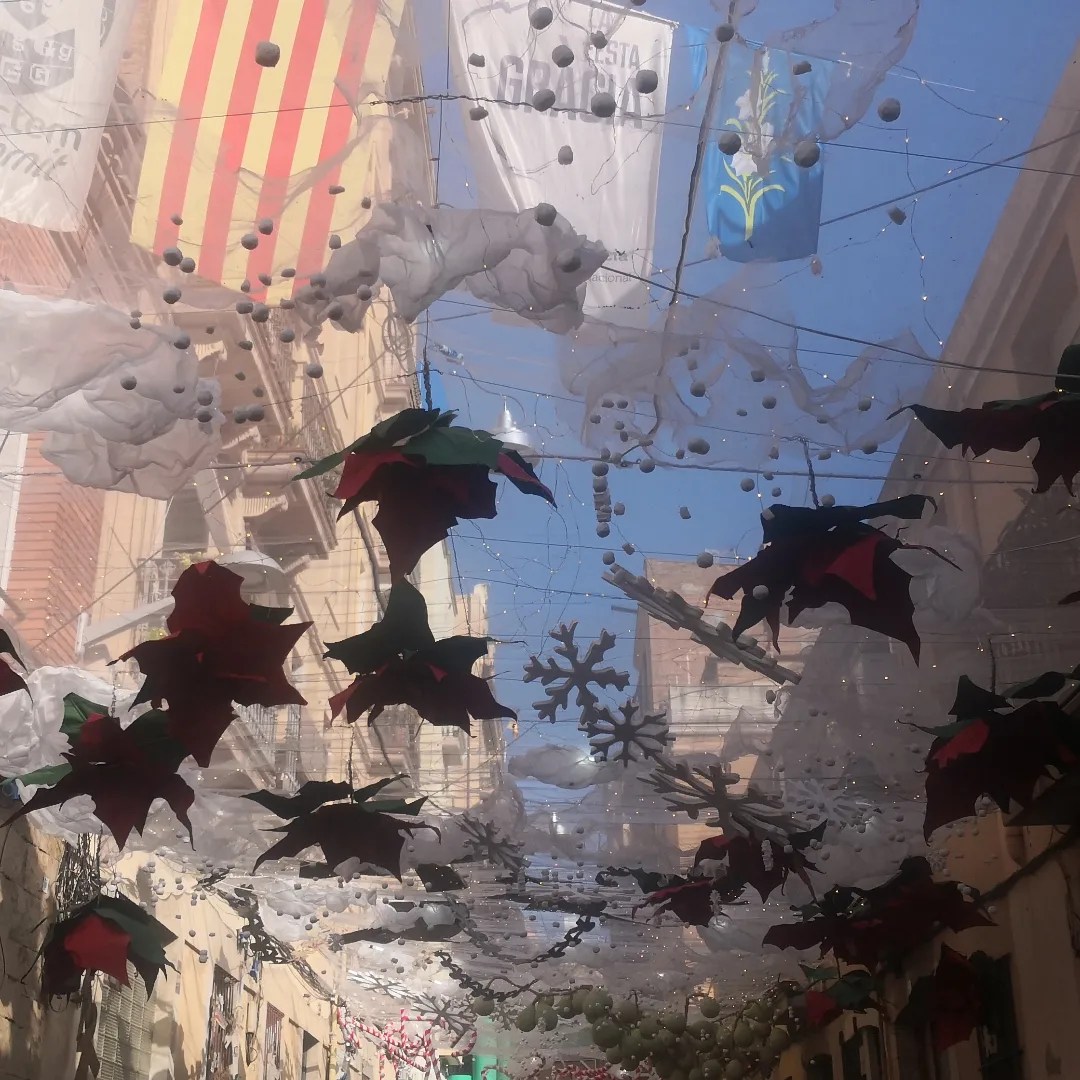


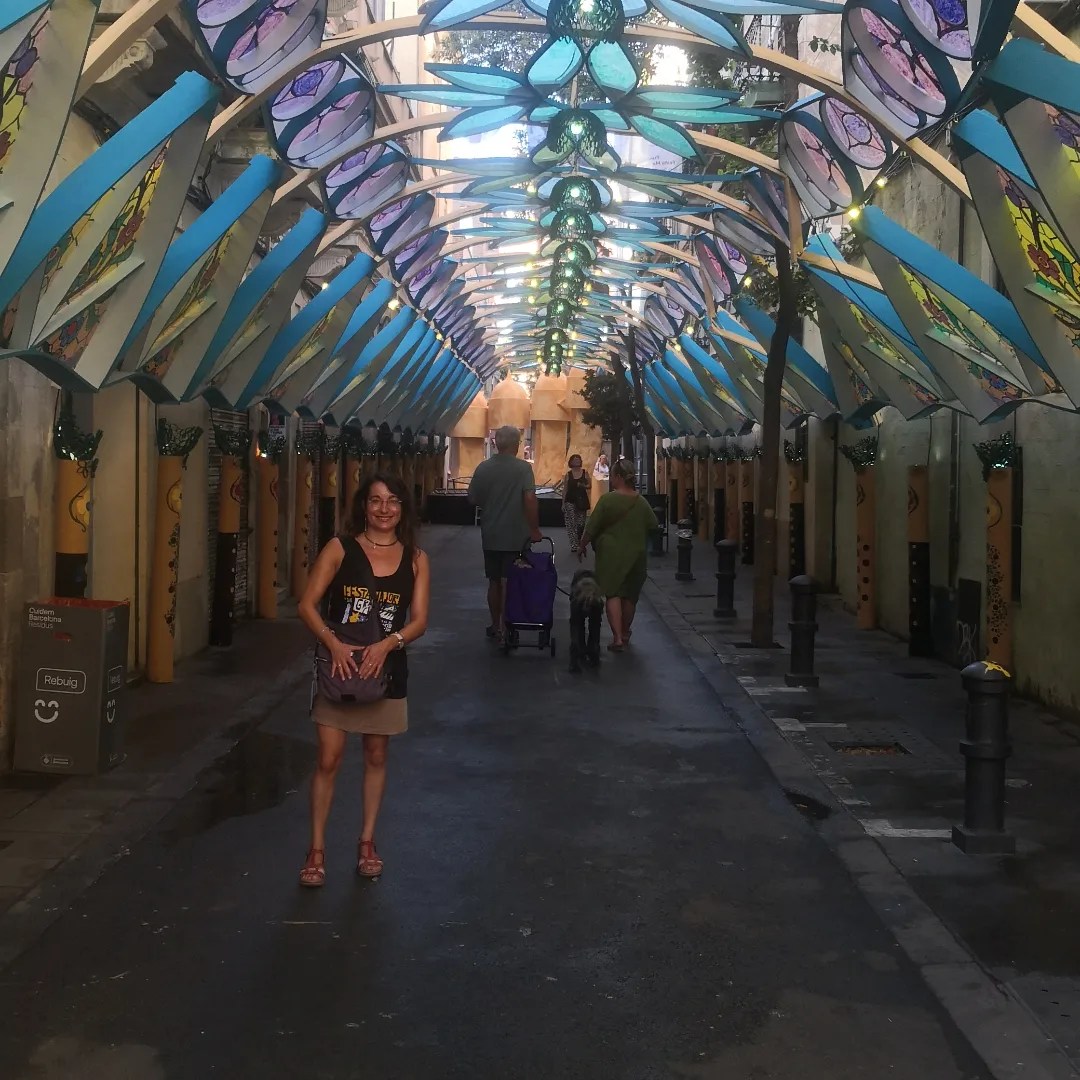


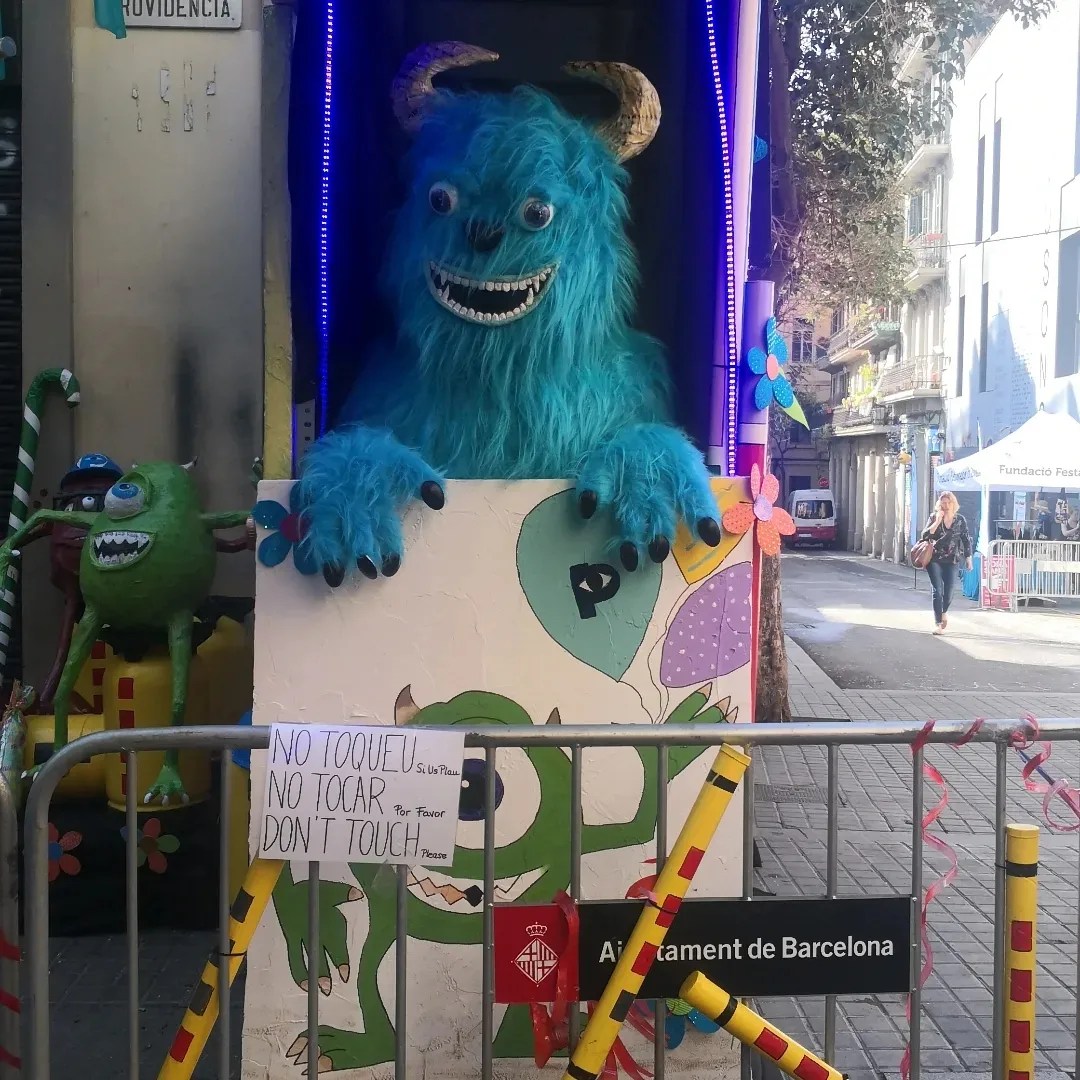


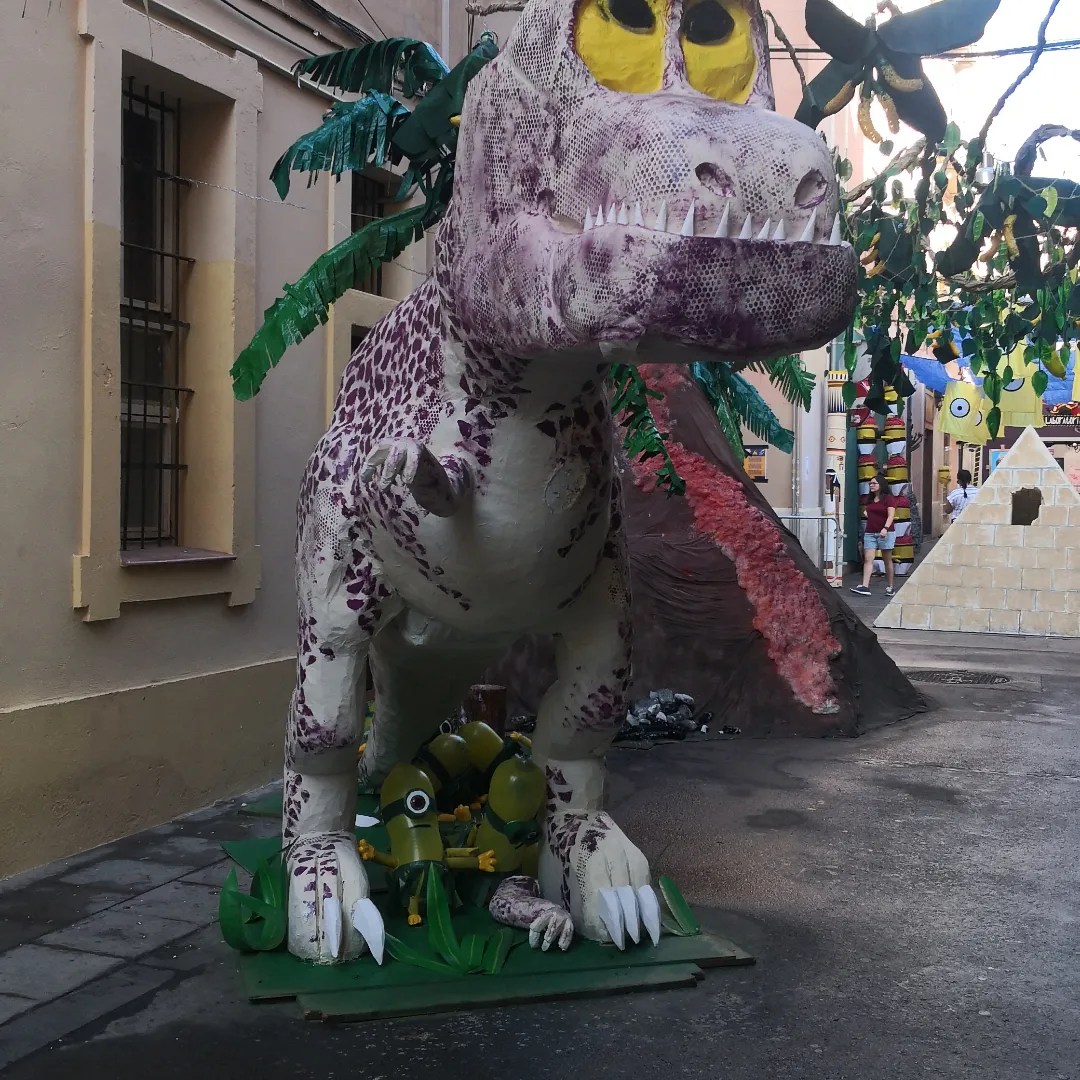
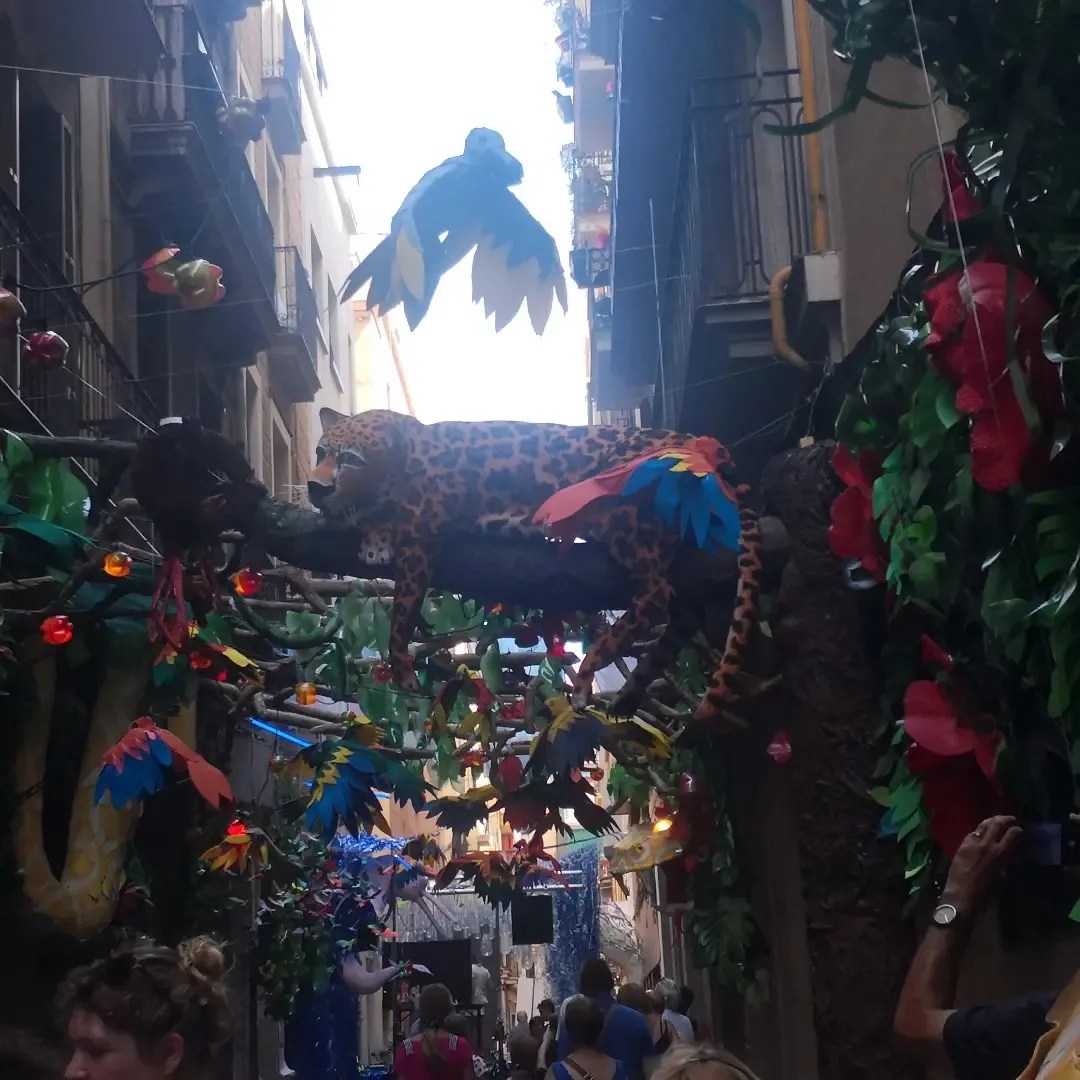
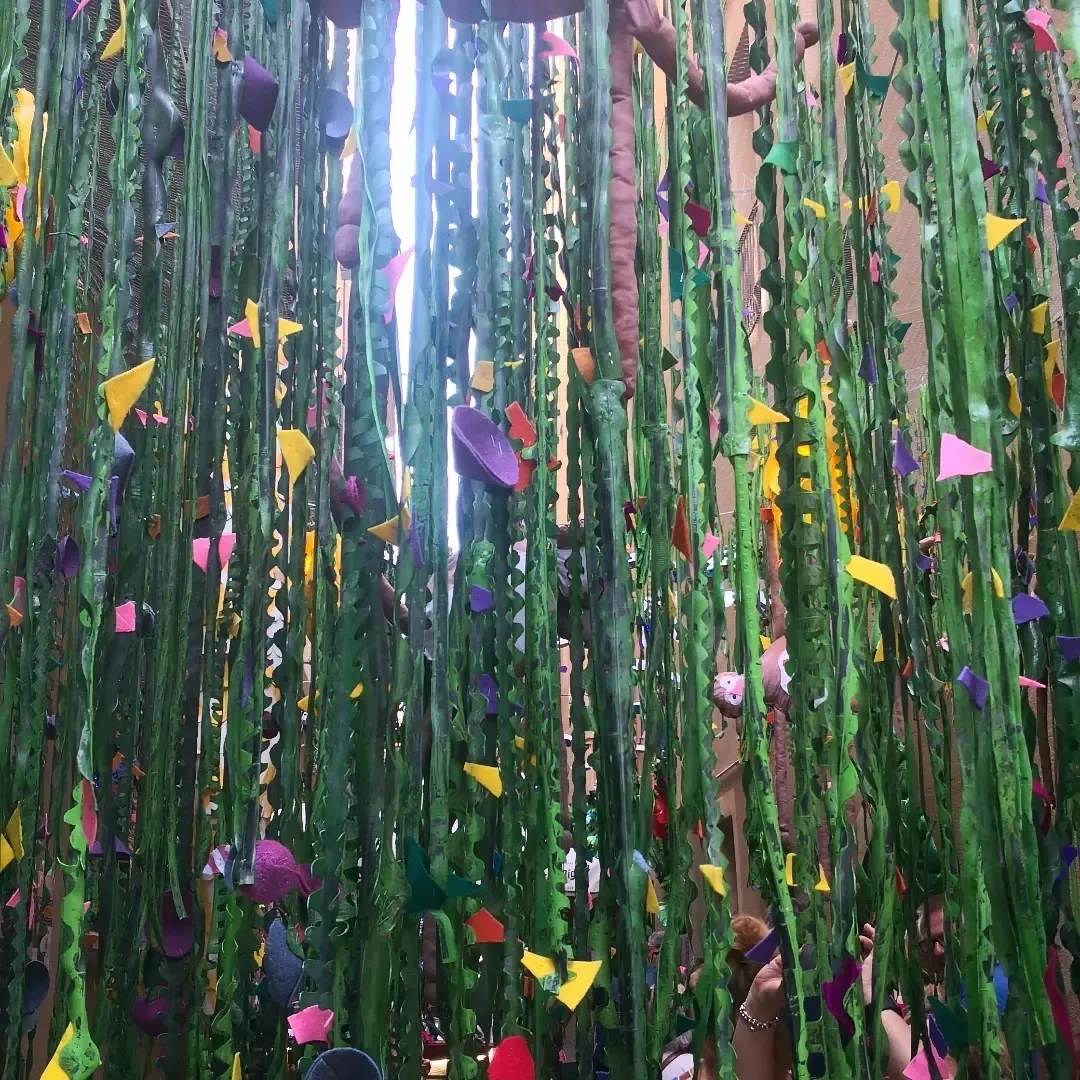
Every year, starting from the 15th of August, my neighbourhood in Barcelona celebrates the Festa Major. It is quite difficult to explain what it is, since I haven’t seen anything like it in Germany or England but if I had to define it, I would say that the neighbourhood celebrates its feeling of community by organising events such as theatre for children, workshops, get-togethers for neighbours and night concerts. The most typical thing of the Festa Major which can be called “Major Party” or “Major Festivity” is that some streets are decorated by the neighbours who chose one topic and invest a whole year, savings and energy to turn the street into a real phantasy scenario. The tradition started some two hundred years ago and it is still not clear whether the neighbourhood celebrates the resurrection of the virgin Mary which is celebrated by the Catholics on the 15th of August, or Saint Roc, a saint linked to Gràcia.
Vila the Gràcia, the old centre of the current neighbour was a long time ago independent from Barcelona and was inhabited by farmers who worked in their lands. The surroundings were so beautiful and the air so healthy that the rich Catalans who lived inside the old city walls, travelled to Gràcia for their holidays. Some two hundred years ago though, a lot of artisans, shopkeepers and workers settled in Gràcia so that there was a rapid growth in population. Gràcia only had 3,062 inhabitants in 1828 but already 61,935 in 1875. From the outset, Gràcia was a pretty exclusive quarter in Barcelona and it soon became the favourite area for artists and writers of Barcelona but that is a different story. The truth is, that nobody really knows why exactly the “vilatans”, the inhabitants in Gràcia, started celebrating their Festa Major, but it has its parallels in all the Festes Majors from small cities and towns in Catalunya and Spain.
The Festa Major in this neighbourhood though, has become quite distinct because there is no other where so many streets are decorated so beautifully and creatively as here. And because this is a festival of creativity, streets have their associations that work in the decorations for moths or even the entire year and there is a contest to choose the most beautiful streets.
I grew up in Gràcia but I don’t really remember much of the Festa Major from the time I was a child. And when I reached teenagerhood I wasn’t much of a party-goer, no members of my family enrolled in the teamwork involved in decorating a street, so the remembrance I have from this week of celebration is mainly the decorations, which to me have always looked like works of art but made by people who are humble enough not to call themselves artists.
Many people know that I moved from my beloved Poblenou to Gràcia a bit more than a year ago. I still feel quite new to the neighbourhood and I commute from Gràcia to Poblenou every day so that I have this wonderful feeling of living in two different Barcelonas at the same time. Poblenou has an industrial past that you can see and smell everywhere but is mot visible in the factories that have been redeveloped there. It has become fashionable only in the past 15 years more or less. Gràcia is the bohemian part of the city and has been pretty exclusive from the very beginning. I am still getting used to living in an area that is considered so cool to most people and that is at the same time more expensive than my old neighbourhood.
Getting used to a place and feeling home there has little to do with how familiar you are with the streets and shops there. For me, feeling home in a neighbourhood means to have my heart in it and I can only have my heart somewhere if I relate to people there. Not very long ago I was thinking that I still needed a favourite spot here, a place I could always go to with a friend and where I could meet with friends to feel like home. In Poblenou it is easy to get to know people because in summer we all end up on the beach in Bogatell and get to talk to those we see regularly there. In autumn, spring and winter people run into each other in the Rambla the Poblenou, the favourite place to go for a walk for the people in the neighbourhood and outside of it. But Gràcia is different. One of the main arteries is carrer Gran de Gràcia, a street that goes from the southern to the northern part of the quarter. But it is quite narrow, full of shops and people that walk there are always in a hurry to go somewhere else. It is not a place you would choose to relax. The same way Travessera the Gràcia runs across Gràcia but it’s to hectic to be the backbone of the life in the neighbourhood. And we don’t have a Rambla del Poblenou here where all people end up seeing each other at least once every now and then. Gràcia has got many hearts that are its several small, beautiful, and clean squares. Without wanting to really be exact about how many of them we have in the old Gràcia I can recall the following: Plaça del Raspall, Plaça del Diamant, Plaça Rius I Taulet, Plaça del Sol, Plaça de la Virreina, Plaça del Nord, Plaça Rovira I Trias, Plaça John Lennon, Plaça de les dones del 36, Placeta de Sant Miquel, Plaça de la Revolució. I really doubt there is any other quarter in Barcelona with so many small squares. All of them indeed full of bars and restaurants. I once read that Gràcia is the neighbourhood with most bars per inhabitant in the whole Europe, but who knows?
However, with so many hearts it is difficult to run into people here and even less so to get to know people if you don’t enrol in a team activity. And as I was saying, I definitely needed a little spot to call “my favourite spot” here. And quite honestly la Placeta de Sant Miquel was already a good candidate. It is even smaller than the others, not squared or round, not so full of people or bars and it leads to two narrow streets one of them has got what is for me a very special building that I call “the flatiron from Gràcia” in carrer Sant Gabriel.
It is a place where I have once had breakfast with a friend of mine in the same bar where my parents meet for 2 years every Sunday before getting married. And if that is not reason enough to like this particular square, there are two schools in it and you can always see children playing in the streets after school. What else could a teacher like me wish for?
I suppose I might have unconsciously picked it up as my favourite square the same way I have picked up the street Sant Pere Martir as my favourite one because my mother and I used to get to her place from our stroll every day walking down to Bonavista from it.
The truth is, that when I read in the Facebook from Gràcia that the members of Placeta de Sant Miquel needed people to help them finish the decorations for the 15th of August, I jumped at the possibility to get to know some people and work with them in this square.
So for the first time in my life, I have lived an experienced the Festa Major in a different and more intense way. I have to say that I had always imagined that decorating a street might be a titanic task to fulfil but now I know how much of an effort it requires.
Not only does the team need to have all the elements from the decoration ready before the 15th of August, but the street needs to be finished with everything in its place by 8 o’clock in the morning of the 15th of August. And in if any street does not manage to have the decoration ready, it can’t take part in the contest.
The time limit is announced by a very loud number of bangs (chupinazos) and after the last one is fired all the streets need to have finished and a member of the street needs to have reported it to the institution in charge otherwise they can’t qualify for the contest. This summer I was very aware of the whole process and even more so because the 15th of August is my “namesday” so a friend and I wanted to celebrate it by having dinner in a small, cosy and delicious restaurant close to my place. And the street where the restaurant is located is also one that is decorated. It was past eleven at night when we reached the restaurant and the people in the street were still painting some details and putting the decoration together. As I learned from the people in La Placeta de Sant Miquel the following day, the people from the street Mozart, the same as the street Verdi and some others, did not go to bed that night. But it was worth it: Mozart was awarded the second prize. Verdi this year wasn’t in the podium, which was a real trauma for them used to winning the contest almost every summer.
Now that I know how much creativity and hard work is involved in the decorations I understand why people are so frustrated and unhappy if they don’t achieve a position in the ranking they find worth their efforts. And this year controversy was served. A lot of teams were really disappointed.
The Festa Major goes on for a week and it involves not only the joy of people who go to have a couple of drinks and listen to the concert and take part in the street activities but also the anger of many inhabitants in the neighbourhood. If you live in a street or close to a street where there are concerts or discos going on till late at night, you are not very likely to sleep well for a week.
There is another problem to it: the streets are closed so people and cars can’t circulate in them as usual. And if the noise and circulation is not enough there is one more issue to talk about: the masses of people flocking to the Festa Major de Gràcia, getting seriously drunk and making more noise than necessary on the whole.
Our Festa Major (I say our because I now feel I belong to Gràcia as I belong to Poblenou) is the best in Barcelona and has turned into a tourist attraction that generates a lot of money for the agencies but little for the inhabitants of the city or the neighbourhood.
There have been proposals to cancel the Festes de Gràcia altogether, but I find them quite radical. I think people should be required to pay a little money to access the streets with the concerts so that at least the people who organise the party are not fully dependent on the drinks they sell in order not to make losses. Another possible solution suggested by my friend to avoid annoying so many inhabitants would be to concentrate the “night life” area in one specific part of Gràcia and swap the area every year. No matter how hard one tries to find a way out, it is never going to please everyone for sure.
I really believe that the Festa Major has grown into a macro-event held in a micro-space. Gràcia, having once been a town, has very narrow streets and during the Festa Major they are clogged with people. My heart and mind are pretty split when it comes to the Festa Major. On the one hand it is linked to tradition. A lot of families have been involved in decorating the streets and pass on the responsibility to their children and now grandchildren. A lot of couples meet in the Festa Major and married in Gràcia and have joined the joy in the streets for years. On the other hand, Barcelona is now a target for tourists that very often come here for cheap entertainment at the expense of the citizens. But how can we now “decrease” the Festa Major? How could we make it possible for the neighbours to have their traditional dinners in the street for the neighbours if the visitors block the streets completely at night?
That is a question whose answer I won’t find. As for me I have to say I would very much love to help a little the team in La Placeta de Sant Miquel to finish the decoration for next year. I’ve grown very fond of the people who were there helping. And, although there are so many people in Gràcia and I don’t know a lot of them here, the people working in Placeta de Sant Miquel knew some of my acquaintances so that I could feel a bit more integrated in Gràcia already. And who knows? Maybe from now on my “namesday” is going to be more interesting to me because that is the precise day when the Festa Major starts and it involves a whole week of entertainment if I am not tired enough to enjoy it.
For those non catholic ones who are wondering what the namesday is, it is the day where your name is celebrated. Generally, names here are saints’ names and every saint has a specific day to be remembered. Mine is on the 15th of August and I like celebrating it one way or another cause as the German say “die Feste soll man feiern wie sie fallen” which means that one should take the chace to celebrate any special occasion. And that is definitely what I do.
 marionamar